


Visit Canada – Explore, Connect, and Experience
Travel to Canada for tourism, family visits, or special events with the right visa for your stay.
Overview
Visitor Visa for Canada
A Canada Visitor Visa, officially called a Temporary Resident Visa (TRV), allows foreign nationals to enter Canada temporarily for tourism, visiting family, or attending events and conferences. This visa does not permit study or employment. Applicants must show they will return to their home country after their visit and provide financial proof and travel details. Visitor visas can be issued as single-entry or multiple-entry, typically valid for stays of up to six months.
Who Needs a Visitor Visa?
Citizens from countries that are not visa-exempt must apply for a Visitor Visa before entering Canada. Those from visa-exempt countries may still need an Electronic Travel Authorization (eTA) if arriving by air. Applicants must meet health, criminal background, and financial criteria and show ties to their home country such as family, employment, or property.

Super Visa for Parents and Grandparents
The Super Visa is for parents and grandparents of Canadian citizens or permanent residents. It allows multiple entries for up to ten years and permits each stay to last five years without the need to renew status. It is an ideal option for long-term family visits, offering greater flexibility and fewer reapplications compared to the regular visitor visa.
Eligibility Criteria and Host Responsibilities
To be eligible, applicants must submit a letter of invitation from their Canadian child or grandchild and prove the host meets the Low Income Cut-Off (LICO) based on family size. Private medical insurance valid for at least one year with minimum coverage of CAD 100,000 is mandatory. The applicant must also pass a medical exam and apply from outside Canada.
Visitor vs Super Visa
| Feature | Visitor Visa | Super Visa |
| Stay per Visit | Up to 6 months | Up to 5 years |
| Validity | Single or multiple-entry | Multiple-entry, up to 10 years |
| Medical Insurance | Not required | Mandatory for 1 year |
| Host Financial Proof | Not required | Required based on LICO |
| Eligible Applicants | All visitors | Only parents or grandparents |
How Long Can You Stay on a Visitor Visa?
Visitor Visa holders are generally allowed to stay in Canada for up to six months per entry. The final decision on the length of stay is made by the border officer, and the date is usually stamped on the passport. It is important to leave Canada before the stay expires or apply for an extension to avoid legal issues.
How to Extend Your Stay as a Visitor?
If you wish to stay longer than six months, you must apply for a Visitor Record before your current status expires. The application must include reasons for staying, proof of finances, and ties to your home country. An extension does not permit work or study unless you also apply for the appropriate permit.
Super Visa Duration and Extension Options
Super Visa holders can stay for up to five years per visit without needing to reapply each time. If additional time is required, they may apply for an extension of up to two years. Applications for extension must include updated insurance documents and an explanation for the extended stay.
Citizens of countries not exempt from visa requirements must apply for a Visitor Visa before traveling to Canada. This visa is required for purposes such as tourism, family visits, or attending events.
The Super Visa is designed for parents and grandparents of Canadian citizens or permanent residents. It allows stays of up to five years per visit and is valid for multiple entries over ten years.
No, both Visitor Visa and Super Visa holders are not allowed to work or study in Canada. They must apply for a work or study permit separately if they plan to engage in such activities.
A Visitor Visa generally allows a stay of up to six months per entry. If you wish to stay longer, you must apply for an extension before your current status expires.
Applicants must show proof of funds such as recent bank statements, income documents, or proof of sponsorship. The goal is to demonstrate that you can support yourself during your stay.
Apply for Visitor Visa or Super Visa
Determine the type of visa required
Identify whether you need a regular Visitor Visa (TRV) or a Super Visa based on your relationship with a Canadian resident and the purpose of your visit.
Complete the application form online or on paper
Visit the official IRCC website to fill out the relevant form. You can apply online through your IRCC account or submit a paper application if eligible.
Gather the required documents
- Valid passport
- Recent passport-sized photographs
- Proof of funds (e.g., bank statements)
- Travel itinerary and accommodation details
- Letter of invitation (recommended)
Provide additional documents for Super Visa
- Proof of private medical insurance from a Canadian provider (min. coverage CAD 100,000 for 1 year)
- Host’s proof of income (meeting LICO requirements)
- Signed invitation letter from your child or grandchild
- Immigration Medical Examination results (if required)
Pay the application and biometrics fee
Fees vary depending on the visa type and whether biometrics are needed. Pay securely online and keep the receipt for your records.
Submit biometrics at a VAC (if required)
Most applicants need to visit a Visa Application Centre (VAC) to provide fingerprints and a photo. Biometrics are valid for 10 years.
Wait for processing and updates
Track your application status via your IRCC account or through the tracking service offered by VAC. Processing time varies by country and application volume.
Receive decision and submit passport (if required)
If approved, you may be asked to send your passport for stamping. For eTA applicants, approval is usually emailed directly without the need to submit a passport.
Prepare for entry to Canada
Bring a printed copy of your approval letter, your passport with the visa, and key supporting documents (like financial proof and invitation letter) when traveling.
Entry Requirements and Eligibility
What Happens at the Canadian Port of Entry?
Upon arrival, a Canadian Border Services Officer (BSO) will verify your travel documents and visa. They may ask about your travel purpose, financial capacity, accommodation plans, and intended duration of stay. Answering questions truthfully and confidently is important.
Documents You May Be Asked to Show
Travelers should carry key documents such as hotel reservations, return flight tickets, travel insurance, proof of funds, and invitation letters (if applicable). These documents support your intent to return home after your authorized stay.
What Super Visa Holders Must Present at Entry
Super Visa travelers may be asked to show proof of valid medical insurance, the host’s income documents, and a copy of the invitation letter. These are crucial to demonstrate that the requirements of the Super Visa are still being met upon entry.
SUCCESS STORIES


Ramandeep Singh Garg & Priyanka Sharma
Canada 🇨🇦
Canada Work Permit Approved! 🇨🇦
Ramandeep Singh Garg and Priyanka Sharma successfully got their Canadian Work Permits approved! With the right guidance and support, their dream of working in Canada became a reality.
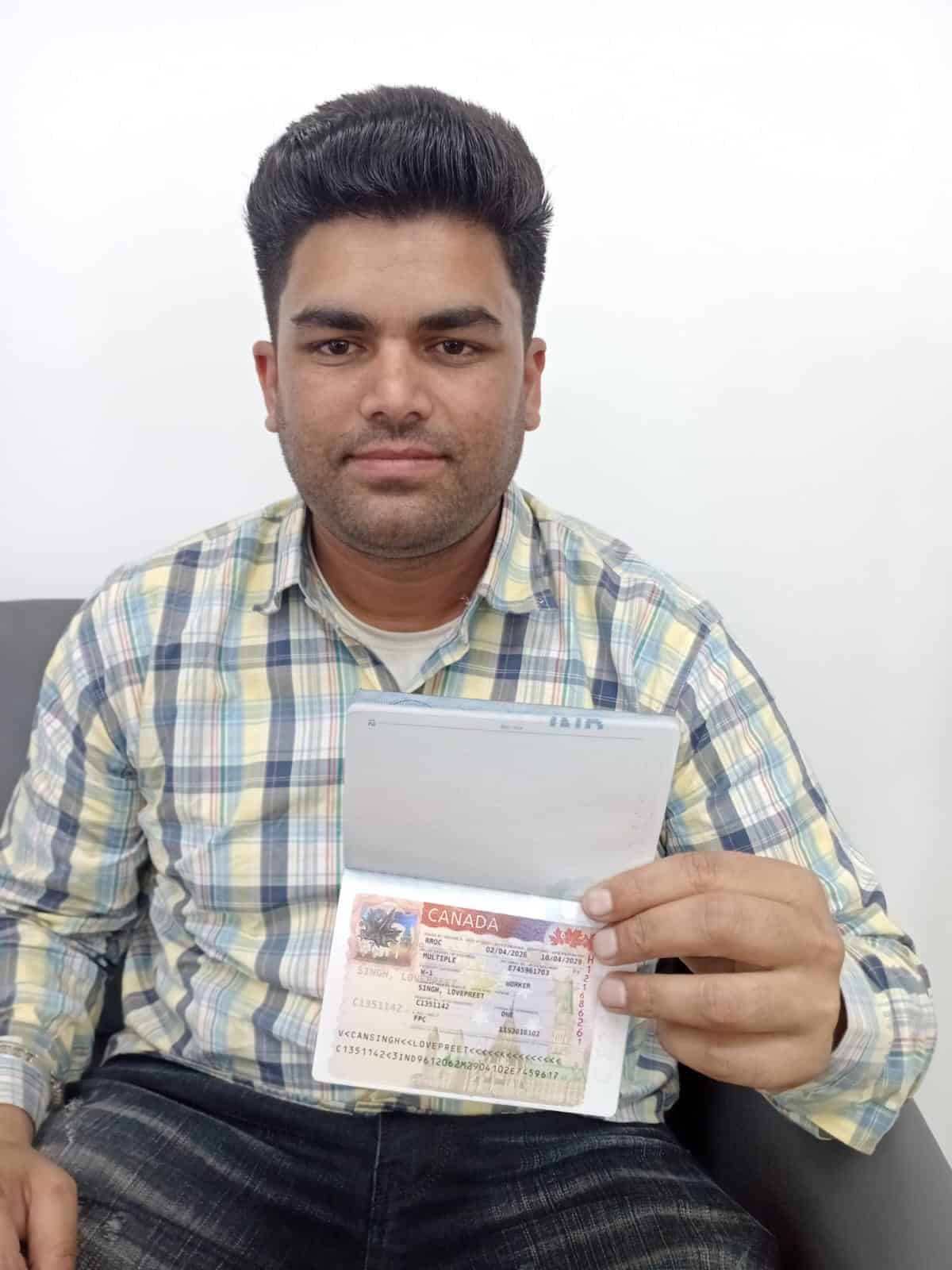
Lavpreet Singh
Canada 🇨🇦
Canada Said YES! 🇨🇦
Another visa dream turned into reality! With the right planning and expert guidance from Acme Visa Solutions, this client successfully got their Canada visa approved.

Ajay Kumar
Canada 🇨🇦
Rejected Before, PR Approved Now! 🇨🇦
Ajay Kumar was rejected before, but Acme Visa Solutions made it happen! Despite a complex case, he successfully got his Canadian Permanent Residency approved. The right team truly makes all the difference.
Resh
Germany 🇩🇪
Freshers Can Apply for Germany Opportunity Card! 🇩🇪
Did you know freshers can apply for the Germany Opportunity Card? With the right profile and strategy, your global career can start today. Acme Visa Solutions provides end-to-end guidance to make it happen.

Balwant Singh
Canada
Work Permit APPROVED! Another Dream Just Came True
Balwant Singh Sidhu & family just got their Work Permit secured with Acme Visa Solutions!